Understanding Perpetual Futures in Crypto Markets
Perpetual futures are a derivative instrument widely used in cryptocurrency trading to gain synthetic exposure to digital assets without directly owning them. Unlike traditional futures contracts, perpetual futures do not have a fixed settlement date. This structural difference has made them one of the most actively traded instruments on crypto derivatives exchanges. They are designed to track the price of an underlying asset, such as Bitcoin or Ethereum, while enabling traders to apply leverage and maintain positions for as long as margin requirements are satisfied.
The rise of perpetual futures coincided with the growth of cryptocurrency exchanges offering margin trading services. As digital asset markets matured, participants sought instruments that allowed hedging, speculation, and capital efficiency. Perpetual futures met these requirements by combining elements of spot trading and traditional futures into a flexible and continuously tradable product.
What Are Perpetual Futures?
Perpetual futures, sometimes referred to as perpetual swaps, are contracts that replicate the price exposure of an underlying asset without granting ownership of the asset itself. A trader entering a perpetual futures contract agrees to exchange the difference in price between the entry and exit points of the contract. The absence of a maturity date distinguishes these contracts from conventional futures traded in commodities or financial indices.
In classical futures markets, contracts expire at predefined intervals, requiring traders either to settle the contract or roll it over to maintain exposure. In contrast, perpetual futures eliminate the rollover process. This allows participants to retain positions indefinitely, subject to meeting maintenance margin requirements and funding payments.
Perpetual futures are quoted against a reference index price derived from multiple spot exchanges. This index is intended to reflect a fair market value of the underlying cryptocurrency. Exchanges then apply mechanisms to ensure the perpetual contract price remains closely aligned with this index.
How Perpetual Futures Work
The defining mechanism of perpetual futures is the funding rate. Because the contracts do not expire, exchanges use periodic funding payments to anchor contract prices to the spot market. The funding rate is exchanged directly between long and short position holders rather than being collected by the exchange.
When perpetual contract prices trade above the underlying index price, the funding rate typically becomes positive. In that scenario, traders holding long positions pay those holding short positions. This payment discourages excessive long positioning and incentivizes short interest, pulling the contract price back toward equilibrium. Conversely, when the perpetual contract trades below the spot index, the funding rate often turns negative, and short positions pay long positions.
Funding payments usually occur at fixed intervals, frequently every eight hours, though the exact schedule varies by platform. The funding rate itself is typically calculated using a formula that includes the difference between the contract price and the index price, as well as prevailing interest rate components embedded in the trading system.
In addition to funding mechanisms, perpetual futures rely heavily on mark prices and index prices for liquidation management. The mark price is an estimated fair value used to calculate unrealized profit and loss and determine margin requirements. It is typically derived from the underlying index price with adjustments for funding differentials. By using a mark price instead of the last traded price, exchanges aim to reduce the risk of forced liquidations triggered by temporary price spikes.
Margin and Leverage in Perpetual Futures
A central feature of perpetual futures is the ability to trade with leverage. Leverage allows traders to open positions larger than their initial capital by borrowing funds implicitly through the exchange’s margin system. For example, with 10x leverage, a trader can control a position worth ten times their posted collateral.
There are two commonly used margin modes: isolated margin and cross margin. In isolated margin mode, the margin allocated to a specific position is limited to a predefined amount. If losses approach that margin threshold, only the allocated funds are at risk of liquidation. In cross margin mode, all available account balance may be used to prevent liquidation, effectively sharing collateral across open positions.
Leverage magnifies both profits and losses. A small price movement against a highly leveraged position can trigger liquidation. Liquidation occurs when the trader’s equity falls below the required maintenance margin. At that point, the exchange automatically closes the position to prevent further losses that could exceed the trader’s collateral.
Exchanges typically operate liquidation engines and, in extreme cases, employ insurance funds or auto-deleveraging systems to manage deficits arising from rapid market moves. These mechanisms are designed to maintain platform solvency and minimize systemic risk.
Pricing Structure and Index Composition
The reliability of perpetual futures depends significantly on how the underlying index price is constructed. Most exchanges calculate the index using volume-weighted average prices from several reputable spot markets. This multi-source approach reduces the influence of anomalies or manipulation on any single venue.
Price deviations between the perpetual contract and the index can arise from imbalances in long and short demand. When speculative interest increases, contract prices may temporarily diverge. The funding mechanism is intended to correct these deviations gradually rather than instantly, allowing market forces to determine positioning incentives.
In volatile environments, spreads between contract prices and spot prices may widen. During such periods, funding rates can fluctuate significantly, increasing the cost of maintaining positions. Traders who hold positions for extended periods often incorporate expected funding expenses into their strategy calculations.
Market Participants and Use Cases
Perpetual futures attract a broad range of market participants, including retail traders, institutional investors, arbitrageurs, hedge funds, and liquidity providers. Each participant category uses the instrument differently.
Speculative traders use perpetual futures to express directional views on price movements. They may open long positions when expecting price increases or short positions when expecting declines. Because short selling in spot crypto markets can be operationally complex, perpetual futures provide an efficient alternative.
Hedgers use perpetual futures to offset risk associated with spot holdings. For instance, a miner holding Bitcoin inventory might open a short perpetual contract to hedge against price declines. If the spot price falls, losses in physical holdings could be partially offset by gains in the derivatives position.
Arbitrage strategies frequently involve exploiting discrepancies between spot and perpetual prices. Traders may simultaneously buy the asset in the spot market and sell it in the perpetual market when funding conditions are favorable. These strategies are often systematic and depend on tight risk management and funding forecasts.
Benefits of Using Perpetual Futures
One significant advantage of perpetual futures is capital efficiency. Through leverage, traders can deploy smaller amounts of capital to gain larger market exposure. This characteristic frees capital for other strategies or risk allocations.
Another advantage is flexibility. The absence of expiration eliminates the operational need to roll contracts forward. Traders can maintain positions over days, weeks, or months without renegotiating exposure. This simplifies portfolio management relative to traditional futures contracts with quarterly expirations.
Perpetual futures also provide efficient access to short exposure. Short selling spot cryptocurrencies typically requires borrowing assets, which may not always be feasible or cost-effective. Perpetual contracts simplify this process by enabling immediate synthetic short positions.
Liquidity is another contributing factor. On many exchanges, perpetual futures markets exhibit deep order books and high trading volumes, often surpassing spot markets in turnover. Greater liquidity can result in tighter bid-ask spreads and improved execution quality.
Risks Associated with Perpetual Futures
Despite their structural advantages, perpetual futures carry substantial risk. Market volatility in cryptocurrencies is often higher than in traditional asset classes. Leverage can amplify minor adverse price movements into significant capital losses.
Liquidation risk is particularly important. If a position’s margin falls below the maintenance threshold, the exchange will forcibly close it. In fast-moving markets, liquidation can occur rapidly and may be accompanied by slippage, increasing realized losses.
Funding rate variability introduces another layer of uncertainty. Traders holding positions over extended periods may incur substantial cumulative funding payments, especially during prolonged market imbalances. Positive or negative funding rates can materially affect the net profitability of a strategy.
Counterparty and platform risk also exist. Because perpetual futures are offered primarily through centralized exchanges, traders are exposed to operational risks, cybersecurity threats, regulatory interventions, and liquidity disruptions. Even when collateral is held on-platform, it may not be protected in the same manner as regulated financial accounts in traditional markets.
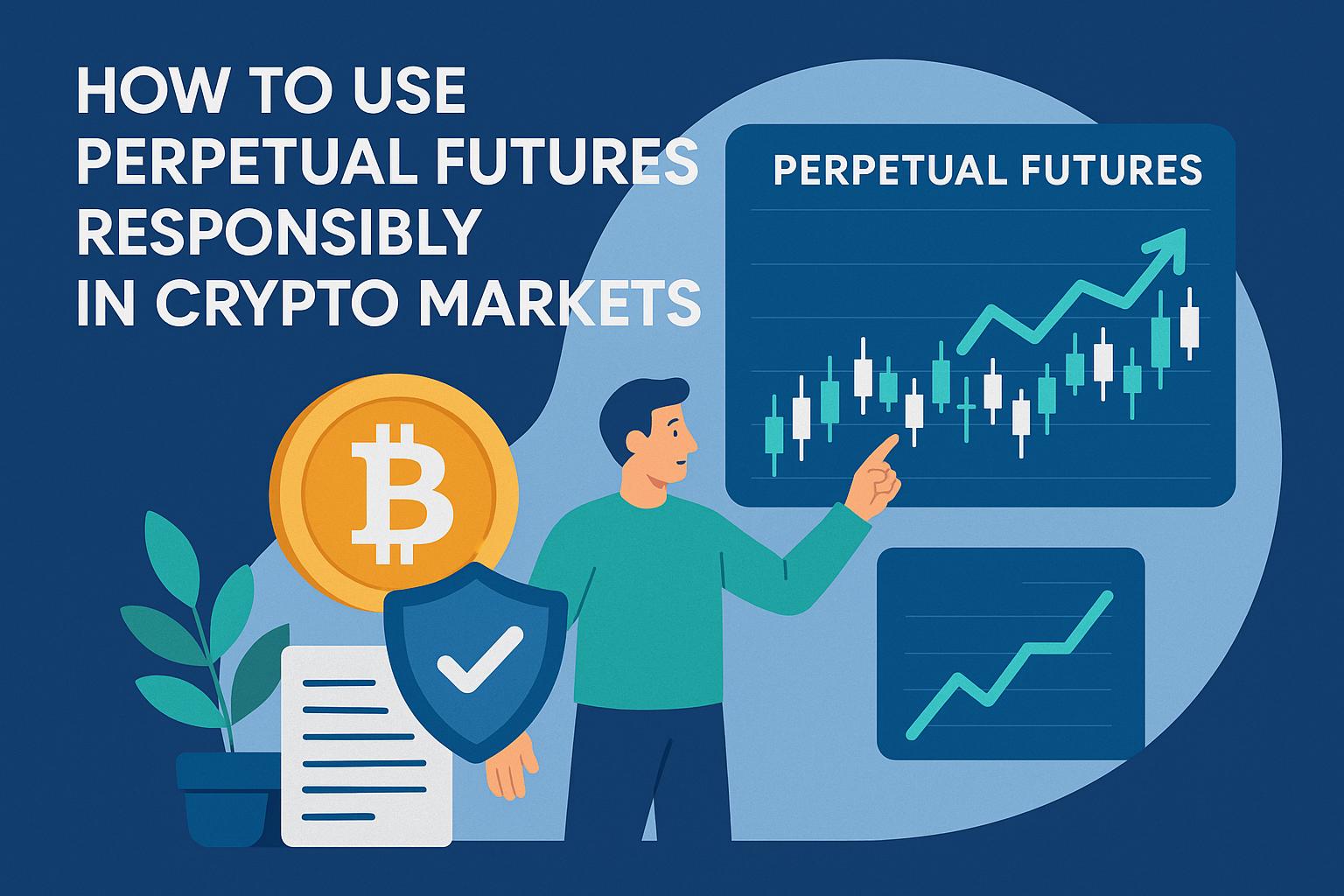
Responsible Use of Perpetual Futures
Effective engagement with perpetual futures requires structured risk management and a thorough understanding of contract specifications. Traders should begin by defining their objective, whether speculative, hedging, or arbitrage-based. Position sizing should align with risk tolerance and portfolio composition.
Understanding leverage is fundamental. High leverage ratios can create the perception of increased opportunity but significantly compress the margin for error. Conservative leverage levels reduce the probability of forced liquidation and improve long-term capital preservation.
Monitoring funding rates is equally important. Funding expenses can accumulate over time, turning otherwise profitable directional trades into net losses. Some trading systems incorporate projected funding costs as part of scenario analysis before entering a position.
Diversification across assets and strategies can mitigate concentrated risk exposure. Rather than allocating capital to a single instrument, traders may balance exposure across different cryptocurrencies or combine spot and derivative positions. This reduces dependency on a single directional forecast.
Stop-loss mechanisms and predefined exit strategies contribute to disciplined execution. Automated triggers can help manage downside risk during periods of rapid price movement. However, traders should also account for the possibility of slippage during high volatility.
Maintaining adequate liquidity in trading accounts provides an additional safety buffer. Excess margin reduces the likelihood of unexpected liquidation and offers flexibility to adjust positions without immediate pressure.
Comparing Perpetual Futures to Traditional Futures
Traditional futures contracts, commonly used in commodity and equity index markets, settle at predetermined dates. Their pricing reflects not only spot expectations but also interest rates, storage costs, and time to maturity. Traders must manage contract rollovers to maintain continuous exposure.
Perpetual futures simplify this process by removing time-based settlement. However, instead of embedding carrying costs in contract pricing over a defined term, perpetuals impose funding adjustments at regular intervals. This dynamic structure allows the contract to function indefinitely while maintaining alignment with the spot price.
Another distinction involves market accessibility. Traditional futures are often traded on regulated exchanges with standardized contract sizes. Perpetual futures are mainly offered on cryptocurrency exchanges and may feature flexible contract sizing, enabling participation from smaller accounts. Nevertheless, regulatory oversight varies by jurisdiction and platform.
Market Dynamics and Systemic Considerations
Because perpetual futures markets often exceed spot markets in trading volume, they can influence underlying asset prices. Intense liquidation cascades may generate rapid price swings in both derivative and spot markets. These feedback effects can amplify volatility during stressed conditions.
Insurance funds maintained by exchanges are intended to absorb losses from bankrupt positions that cannot be closed at a price sufficient to cover liabilities. When insurance funds are insufficient, some exchanges implement auto-deleveraging systems, reducing positions of opposing traders. Such mechanisms can introduce additional complexity to risk calculations.
The interplay between open interest, leverage utilization, and funding rates can provide insight into overall market positioning. Elevated open interest combined with extreme funding rates may indicate crowded trades. Traders often monitor these indicators to assess the sustainability of prevailing trends.
Conclusion
Perpetual futures have become a central instrument within cryptocurrency derivatives markets. Their defining characteristic, the absence of an expiration date, allows continuous exposure while funding mechanisms keep contract prices aligned with spot markets. The availability of leverage, combined with flexible long and short positioning, makes perpetual futures suitable for speculation, hedging, and arbitrage.
However, the structural features that create opportunity also introduce significant risk. High leverage, volatile price action, fluctuating funding rates, and platform-related considerations require disciplined management. Effective participation depends on a comprehensive understanding of margin mechanics, liquidation procedures, and funding dynamics.
When approached with structured risk controls and informed strategy design, perpetual futures can function as a sophisticated tool within a broader digital asset portfolio. Their continued growth reflects demand for flexible, capital-efficient exposure in evolving cryptocurrency markets.
This article was last updated on: July 21, 2026