Understanding Funding Rates in Crypto Trading
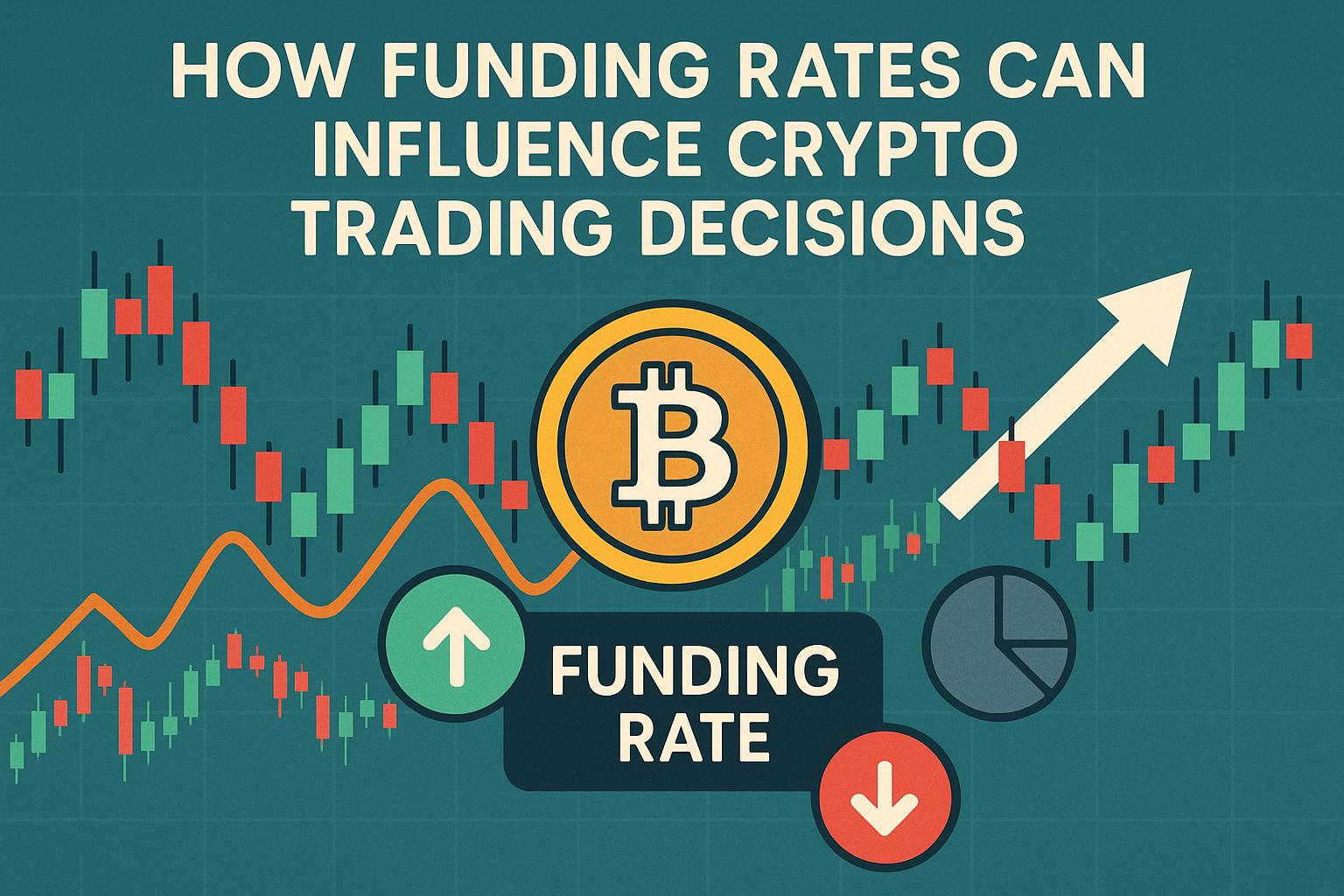
Funding rates are a central feature of perpetual futures markets in cryptocurrency trading. They serve as a balancing mechanism that keeps the price of perpetual contracts aligned with the underlying spot market. Because perpetual contracts do not expire, exchanges require an ongoing process to ensure that their prices do not deviate significantly from the actual asset value. Funding rates perform this function by creating periodic payments between traders holding opposing positions.
For participants in crypto derivatives markets, funding rates represent both a cost consideration and a potential source of return. Their influence extends beyond simple fee calculations. Funding rates shape trader behavior, reflect prevailing market sentiment, and affect risk management decisions. A thorough understanding of how they operate is essential for traders who actively use leverage or hold positions over extended periods.
What Are Funding Rates?
Funding rates are recurring payments exchanged directly between traders who hold long positions and those who hold short positions in perpetual contracts. Unlike traditional futures contracts, which expire on specific dates and settle against the spot market, perpetual contracts remain open indefinitely. Without expiration, there needs to be a mechanism to tether their prices to the reference index price of the underlying asset. Funding rates provide that anchor.
When traders enter a perpetual contract, they agree to exchange funding payments at regular intervals, typically every eight hours, although the frequency may vary by exchange. These payments do not go to the exchange itself. Instead, they are transferred between market participants. If the funding rate is positive, traders holding long positions pay traders holding short positions. If the rate is negative, traders with short positions pay those holding long positions.
The purpose is to create incentives that draw the perpetual contract price toward the spot price. When the perpetual price exceeds the spot price, traders are encouraged to open short positions and discouraged from holding longs. When the perpetual price falls below spot, the opposite effect occurs. Over time, this reduces persistent price divergence between the derivatives market and the cash market.
The Structure of Perpetual Contracts
To understand funding rates more completely, it is helpful to examine the structure of perpetual contracts. Perpetual futures are derivative instruments that allow traders to gain exposure to price changes in a cryptocurrency without owning the asset itself. They are typically margined instruments, meaning traders can use leverage to control larger positions with a smaller amount of capital.
Leverage magnifies both gains and losses, making price alignment between the contract and the spot market especially important. If perpetual prices diverge widely from spot prices, leveraged positions could reflect distorted valuations. Funding rates help mitigate this risk.
Each perpetual contract typically references a composite index price derived from multiple spot exchanges. This index provides a benchmark for determining whether the perpetual contract is trading at a premium or a discount. Exchanges then use a formula that incorporates the price difference and, in some cases, an interest rate component to calculate the funding rate.
The Mechanism Behind Funding Rates
The funding rate calculation generally consists of two primary components: the premium index and the interest rate element. The premium index measures the difference between the perpetual contract price and the underlying spot index price. If the contract trades above the spot index, the premium index is positive. If it trades below, the premium index is negative.
The interest rate component reflects the theoretical cost of holding the base asset versus the quote asset. In cryptocurrency markets, this is often a relatively small and stable input compared to the premium component. The final funding rate is derived from combining these values according to exchange-specific formulas.
Suppose the perpetual contract for a cryptocurrency is trading above its spot price. This indicates stronger demand for long positions. In this situation, the funding rate is typically positive. As a result, long position holders must pay shorts at the scheduled funding interval. This additional cost incentivizes traders to either close long positions or open short positions, increasing selling pressure on the contract and pushing its price closer to spot.
Conversely, if the perpetual contract price is below the spot price, the funding rate becomes negative. Short position holders then pay longs. This motivates traders to close shorts or initiate longs, increasing buying pressure and helping the contract price rise toward the spot level.
Funding payments are usually calculated based on a trader’s position size and are proportional to the funding rate at the time of settlement. Traders who close their positions prior to the funding timestamp generally avoid paying or receiving that period’s funding, though timing trades precisely can introduce additional market risk.
Frequency and Settlement Process
Funding intervals vary by exchange but are commonly set at eight-hour intervals, resulting in three funding events per day. Before each funding timestamp, the exchange announces the funding rate that will apply. At the exact funding time, payments are exchanged between traders with open positions.
The funding rate displayed prior to settlement is often an estimate based on current order book conditions and price relationships. As trading continues, the predicted rate can fluctuate. Traders closely monitor these projected rates, particularly in volatile markets where funding can change significantly within a short period.
Settlement is typically automatic and occurs without requiring manual action from traders. The funding payment is added to or deducted from the trader’s margin balance. This can affect the available collateral in leveraged positions, influencing liquidation risk if the account equity approaches maintenance requirements.
The Role of Funding Rates in Trading Decisions
Funding rates play a meaningful role in shaping trader behavior. Since these payments are recurring, their cumulative impact can be significant for positions held over days or weeks. Traders must weigh expected price movements against the ongoing funding costs or benefits associated with maintaining exposure.
Impact on Long and Short Positions
When the funding rate is positive, long position holders incur a cost at each funding interval. For short traders, the same rate represents income. If the positive funding rate persists at elevated levels, the cost of holding a long position can accumulate rapidly. Traders expecting only modest upward price movement may reconsider the risk-reward balance when factoring in funding expenses.
In contrast, a negative funding rate creates an incentive for maintaining long exposure, as long position holders receive payments from shorts. This can partially offset unrealized losses or enhance returns if the market moves favorably. However, traders must remember that funding benefits are typically small relative to potential price volatility. A sudden adverse price movement can outweigh funding gains.
Short sellers face a similar dynamic. When funding rates are negative, they pay to hold short positions. This cost must be incorporated into their strategy, especially if they anticipate a gradual downward price trend rather than a swift decline.
Market Sentiment Indicator
Beyond direct costs, funding rates are widely interpreted as indicators of market positioning and sentiment. A consistently positive funding rate implies that the majority of traders are positioned long and willing to pay a premium to maintain that exposure. This may suggest strong bullish sentiment in the derivatives market.
However, extreme positive funding rates can also signal crowded positioning. When a large proportion of market participants hold leveraged longs, the market becomes vulnerable to sharp corrections. A sudden decline in price can trigger liquidations, amplifying downward momentum. Traders monitor elevated funding levels as potential warning signs of imbalance.
Similarly, persistently negative funding rates indicate that short positions dominate and that traders are paying to maintain bearish exposure. While this may reflect caution or negative expectations, it can also create conditions for short squeezes if prices begin to rise unexpectedly. In such cases, short traders may close positions rapidly to limit losses, accelerating upward price movement.
Thus, funding rates provide insight not only into immediate costs but also into broader positioning trends within the market. They serve as a quantitative measure of directional bias in leveraged trading activity.
Funding Rates and Arbitrage Opportunities
One of the practical applications of funding rates lies in arbitrage strategies. Advanced traders and institutional participants may seek to exploit discrepancies between perpetual contract funding and spot market conditions. A common approach involves simultaneously holding opposing positions in the spot and perpetual markets.
For example, if the funding rate is significantly positive, a trader might purchase the underlying asset in the spot market while shorting the equivalent perpetual contract. In this configuration, the trader receives funding payments from long traders in the perpetual market while maintaining a delta-neutral position relative to price movements. Ideally, gains from funding exceed transaction costs and other risks.
Such strategies require careful execution, consideration of fees, and robust risk controls. Basis risk, liquidity constraints, and exchange-specific rules can affect outcomes. Nevertheless, funding-driven arbitrage contributes to overall market efficiency by narrowing price differentials and distributing risk across participants.
Risk Management Considerations
Funding rates introduce an additional dimension of risk in leveraged trading. Traders must consider not only price risk but also funding variability. During periods of heightened volatility, funding rates can fluctuate widely from one interval to the next. An unexpectedly high funding charge can strain margin balances, especially for highly leveraged accounts.
Managing this risk involves monitoring projected funding rates, adjusting position sizes, and maintaining adequate collateral. Some traders choose to reduce exposure shortly before funding timestamps if projected rates are exceptionally high. Others incorporate expected funding costs into their broader portfolio calculations.
It is also important to recognize that exchanges may impose caps or floors on funding rates to prevent extreme values. While these limits provide a degree of predictability, they do not eliminate the impact of sustained positive or negative rates over time.
Comparing Funding Rates Across Exchanges
Different cryptocurrency exchanges may calculate funding rates using distinct methodologies, reference indices, and interval frequencies. As a result, funding rates for the same asset can vary across platforms. Traders operating on multiple exchanges often compare these rates to identify advantageous conditions.
Divergences may arise due to differences in order book depth, user base composition, or regional demand patterns. For instance, one exchange might exhibit strong retail-driven long demand, resulting in higher positive funding rates, while another displays more balanced positioning.
Understanding these variations allows traders to allocate capital more efficiently. However, transferring funds between exchanges involves operational considerations, including withdrawal times, fees, and counterparty exposure.
Long-Term Implications of Funding Dynamics
Over extended time horizons, funding rates can influence the structural development of derivatives markets. Persistent positive funding in a bullish cycle may encourage more short sellers to participate, enhancing liquidity and depth. In bearish cycles, prolonged negative funding may attract contrarian long positions.
The interaction between spot and derivatives traders contributes to overall price discovery. Funding rates, by incentivizing balancing trades, help maintain coherence between these interconnected markets. They also provide ongoing data about leverage concentration, which analysts use to interpret market resilience or fragility.
For portfolio managers and quantitative traders, historical funding data can be integrated into models that assess expected carry, volatility regimes, and sentiment shifts. Although funding rates alone do not predict price direction, they complement other indicators such as open interest, trading volume, and order flow metrics.
Strategies to Benefit from Funding Rates
Traders adopt various approaches to incorporate funding considerations into their strategies. Some focus on minimizing costs by aligning position direction with prevailing funding trends. Others actively seek to capture funding payments through hedged or market-neutral methods.
When funding rates are modest and stable, they may play a secondary role relative to broader market analysis. However, when rates become elevated, they can materially affect expected returns. In such circumstances, traders may rebalance portfolios, adjust leverage, or temporarily exit positions to manage expenses.
It remains essential to view funding rates as part of a comprehensive strategy rather than as a standalone signal. Market conditions can change rapidly, and funding incentives may shift accordingly. Effective trading decisions require integrating funding analysis with technical evaluation, macroeconomic context, liquidity assessment, and risk tolerance.
Understanding funding rates is therefore fundamental for participants in perpetual futures markets. By examining how rates are calculated, how they influence long and short positions, and how they reflect broader sentiment, traders can make more informed decisions. Careful monitoring and integration of funding dynamics into risk management frameworks can improve consistency and strategic clarity in cryptocurrency derivatives trading.
This article was last updated on: July 6, 2026