Understanding Open Interest in Crypto Derivatives Trading
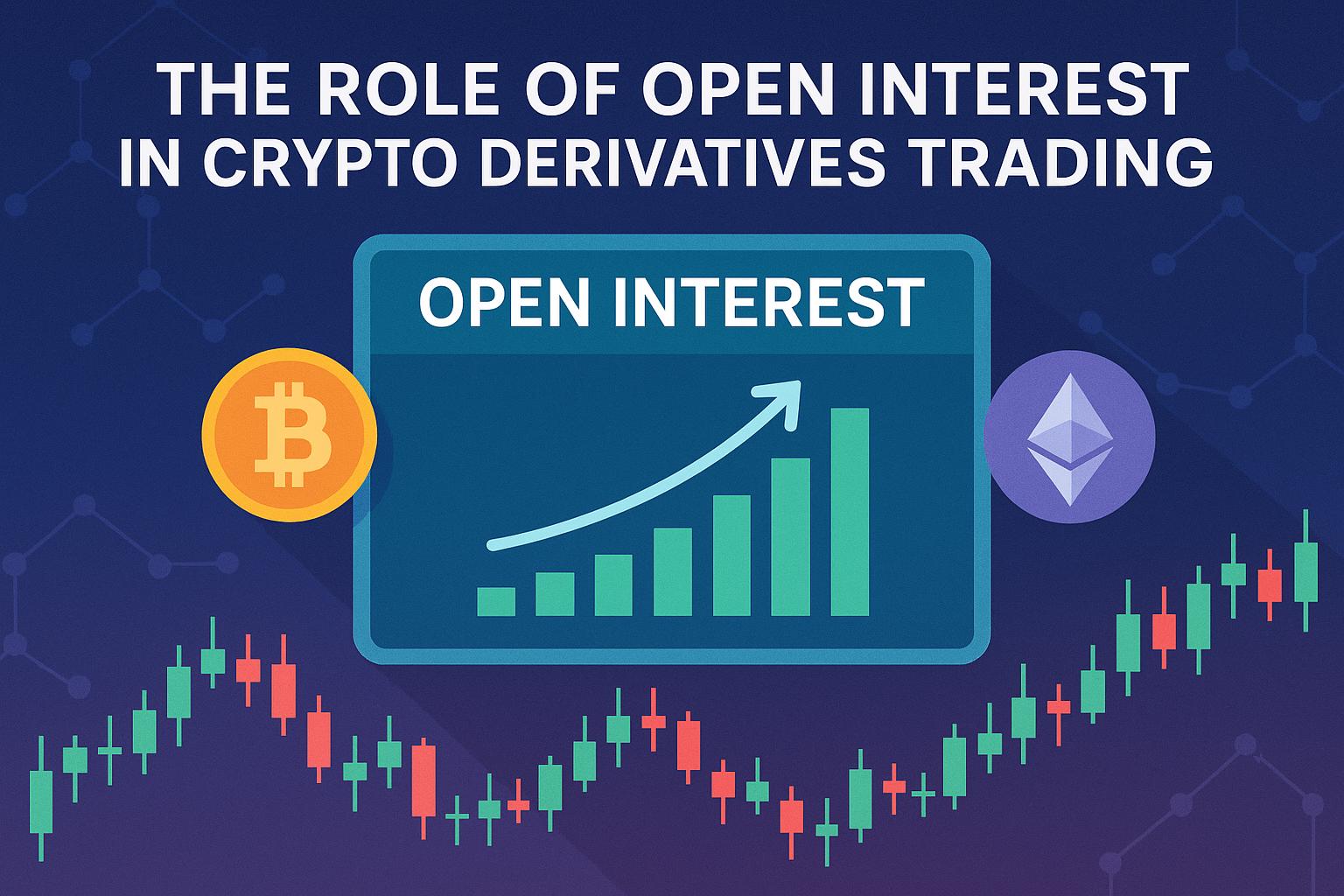
In the world of crypto derivatives trading, open interest is a foundational metric that reflects the total number of outstanding derivative contracts that remain active at a given time. These contracts, which commonly include futures and options tied to cryptocurrencies such as Bitcoin or Ethereum, represent agreements between buyers and sellers to transact at a future date or under specified conditions. Unlike spot trading, where assets change hands immediately, derivative contracts can remain open for extended periods. Open interest measures how many of these contracts have not yet been closed, expired, or settled.
Open interest is frequently referenced alongside trading volume and price data. While volume captures how many contracts change hands within a specific period, open interest represents the cumulative total of active contractual obligations. This distinction is critical for traders who seek to assess market participation, leverage levels, and the durability of ongoing trends. By examining open interest, participants gain insight into the structural strength of market activity rather than just its short-term fluctuations.
The relevance of open interest in cryptocurrency markets has increased as derivatives trading volumes have grown substantially. Many major exchanges now report open interest data in real time, allowing traders, analysts, and institutional participants to incorporate it into their evaluation of market dynamics. Understanding how open interest behaves under different market conditions is essential for developing a comprehensive analytical framework.
How Open Interest Works
To understand open interest, it is necessary to examine how derivative contracts are created and closed. Every futures or options contract involves two parties: one taking a long position and the other taking a short position. When both parties enter into a new agreement, a new contract is formed, and open interest increases by one contract. Importantly, open interest does not count each side separately; it counts the contract itself.
If an existing participant closes a position by offsetting it with another trader willing to take the opposite side, and no new contract is created in the process, open interest decreases by one. If instead a trader transfers their position to someone else without closing the contract, open interest remains unchanged because the contract itself continues to exist. Therefore, open interest changes only when contracts are created or extinguished.
This dynamic differs from trading volume. Volume increases whenever contracts are traded during a session, regardless of whether open interest rises, falls, or remains constant. For example, two traders may exchange an already existing contract multiple times throughout a day, increasing volume without affecting open interest. Conversely, open interest can increase even with moderate trading volume if the net number of new contracts exceeds closures.
In the context of crypto perpetual futures, which do not have fixed expiration dates, open interest reflects the number of active leveraged positions in the market. In dated futures and options contracts, open interest evolves over the life of the contract and typically declines as expiration approaches and participants close or roll over positions.
The Significance of Open Interest
Open interest serves as a measure of market participation and engagement. A rising open interest indicates that new capital is entering the market or that additional leverage is being deployed. This often corresponds with increasing interest from retail speculators, institutional traders, or hedgers who are managing risk exposure. In contrast, declining open interest may signal that traders are reducing exposure, closing positions, or reallocating capital elsewhere.
Liquidity is closely connected to open interest. Markets with higher open interest tend to exhibit tighter bid-ask spreads and more efficient price discovery, since a larger base of participants stands ready to transact. In crypto derivatives markets, where liquidity can vary significantly across exchanges and contract types, open interest helps traders evaluate where sufficient depth exists to support sizable trades without excessive slippage.
However, open interest by itself does not indicate whether the market is bullish or bearish. Because every contract consists of both a long and a short, the aggregate number of outstanding contracts does not reveal directional bias. Instead, it reflects the total scale of exposure. To interpret directional implications, open interest must be considered alongside price movements, funding rates, liquidation data, and other contextual indicators.
Open interest also provides clues about the maturity of a trend. Sustained trends with increasing open interest may reflect growing conviction among participants. If price movements occur while open interest declines, this may suggest that the move is driven by short covering or long liquidation rather than fresh commitment.
Open Interest and Market Sentiment
While open interest does not inherently convey bullish or bearish alignment, its interaction with price changes offers meaningful insights into market sentiment. Traders commonly analyze four broad scenarios that emerge from the relationship between price and open interest.
When price rises and open interest increases simultaneously, the interpretation often suggests that new buyers are entering the market and that the upward trend is being supported by expanding participation. This configuration can indicate strengthening conviction, particularly when accompanied by rising trading volume. The presence of new contracts implies that traders are willing to initiate fresh positions rather than simply closing out previous ones.
If price rises while open interest declines, the market may be experiencing short covering. In this case, traders who previously held short positions close them to limit losses, pushing prices upward without an equivalent influx of new long positions. Such moves may have limited durability because they are driven by position unwinding rather than sustained buying demand.
Conversely, when prices fall and open interest increases, the market may be absorbing new short positions. This suggests growing bearish exposure and potentially strengthening downward momentum. If prices decline while open interest contracts, the move may represent long liquidation instead of aggressive short selling. Again, the distinction matters because it reflects whether new participants are building positions or existing ones are simply exiting.
In cryptocurrency markets, where leverage is widely used, open interest can also contribute to understanding liquidation risk. Elevated open interest combined with high leverage levels increases the probability of forced liquidations during sharp price swings. Such liquidations can trigger rapid movements as contracts are automatically closed by exchanges to prevent negative account balances.
Open Interest Across Different Crypto Derivatives
Open interest behaves differently depending on the derivative instrument being traded. In perpetual futures, which are widely used in crypto markets, contracts do not expire but are stabilized by funding rate mechanisms that incentivize alignment with spot prices. Open interest in perpetual futures can build to substantial levels during trending phases since positions may remain open indefinitely. As leverage accumulates, the market becomes more sensitive to price shocks.
For traditional futures contracts with fixed expiration dates, open interest typically increases during the early and middle phases of the contract cycle as traders establish positions. Toward expiration, open interest often declines as participants close or roll positions into later-dated contracts. Observing these cyclical patterns helps analysts distinguish normal contract roll activity from broader shifts in participation.
Options markets provide an additional dimension of analysis. Open interest in call and put options can be evaluated across different strike prices and maturities. This distribution highlights where traders are concentrating exposure. For example, significant open interest in out-of-the-money call options at specific price levels may indicate expectations of future upside. However, options open interest must be assessed carefully because contracts may be used for both speculative and hedging purposes.
The growth of crypto options markets has made strike-level open interest analysis increasingly relevant. Traders monitor so-called option “open interest clusters,” where large concentrations of contracts exist at specific price levels. Such clusters may influence short-term price behavior near expiration as hedging flows adjust.
Open Interest and Institutional Participation
As institutional involvement in cryptocurrency derivatives expands, open interest data can provide indirect insights into professional engagement. A steady rise in open interest over extended periods may reflect growing institutional allocation, particularly when accompanied by increased basis trades and arbitrage strategies. Institutions frequently use futures to hedge spot holdings, manage basis risk, or implement structured strategies.
At the same time, sharp spikes in open interest during periods of retail-driven momentum can indicate speculative waves. Distinguishing between structurally sustained increases and short-term surges is important for evaluating the durability of market moves. Analysts often compare exchange-level open interest data to identify where growth is concentrated and whether it aligns with regulated or offshore platforms.
Open interest can also interact with macroeconomic developments. When broader market uncertainty increases, traders may initiate derivative positions to hedge exposure or express directional views. These adjustments can lead to rapid changes in open interest across multiple exchanges simultaneously.
Factors Influencing Open Interest
Several key forces shape open interest dynamics in crypto derivatives markets. The entry of new participants is a primary driver. When traders open fresh positions, particularly with leverage, total outstanding contracts expand. The accessibility of crypto derivatives through online exchanges has broadened participation to a global audience, contributing to periodic increases in open interest across major assets.
Volatility is another significant factor. Periods of heightened price fluctuation typically attract speculative interest and encourage both short-term trading and hedging activity. As volatility rises, traders may establish new positions to capitalize on movement or protect existing holdings, causing open interest to increase. Conversely, during prolonged low-volatility phases, participation may decline, leading to contraction.
Regulatory changes and exchange policies can influence open interest by altering leverage limits, margin requirements, or product availability. For example, stricter margin requirements may reduce overall leverage and result in lower open interest as traders scale back exposure. Conversely, the launch of new derivative products can stimulate growth by offering additional opportunities for positioning.
Market structure events such as liquidations, funding rate adjustments, and cross-exchange arbitrage flows also contribute to open interest fluctuations. In highly leveraged markets, cascading liquidations can rapidly reduce open interest within minutes as contracts are forcibly closed. These sudden contractions can coincide with sharp price movements, underscoring the interconnected nature of derivatives positioning.
Practical Considerations for Traders
When incorporating open interest into analysis, traders should focus on consistency and context. Monitoring daily changes over time provides a clearer picture than reacting to isolated spikes. Combining open interest data with volume, price structure, and volatility indicators allows for more balanced interpretation. Abrupt increases in open interest without corresponding price movement may suggest range expansion potential, whereas sharp declines during consolidation may indicate reduced participation.
Exchange-specific open interest data also matters. Concentrated growth on a single platform may expose that exchange to liquidation-driven volatility. Aggregated open interest across multiple venues provides a broader view of overall market exposure. Traders seeking to manage risk often track large shifts in total open interest relative to historical averages.
Another practical consideration involves funding rates in perpetual futures markets. Elevated positive funding rates may reflect crowded long positioning when open interest is high. Negative funding rates in conjunction with rising open interest may indicate aggressive short positioning. Understanding how these variables interact enables more informed assessment of positioning imbalances.
Risk management remains central. High open interest amplifies the effects of sudden price movements, particularly in leveraged markets. Traders should evaluate whether expanding open interest reflects sustainable participation or excessive leverage that could trigger instability.
The Broader Analytical Role of Open Interest
Open interest occupies a distinct role within the broader framework of technical and derivatives analysis. It does not predict price direction independently, but it enhances interpretation of price action. By revealing whether new positions are being created or old ones are being closed, open interest clarifies whether market moves are supported by fresh commitment or driven by liquidation dynamics.
In cryptocurrency markets, which operate continuously and across jurisdictions, the transparency of real-time open interest data offers a measurable indicator of participation. As derivatives markets continue to expand, open interest is likely to remain a central reference point for traders assessing liquidity, leverage, and trend sustainability.
Understanding open interest requires more than observing a single figure. It involves recognizing how contracts are formed, how leverage affects exposure, and how price movements interact with participation levels. When integrated thoughtfully into a broader analytical strategy, open interest contributes meaningful perspective to the evaluation of crypto derivatives markets and supports more structured trading decisions.
This article was last updated on: June 29, 2026